
HR Manager
Great leaders are not simply born — they are built. Through deliberate practice, honest self-reflection, and a commitment to continuous growth, anyone can develop the leadership qualities that define outstanding professionals.
Whether you are a student stepping into your first leadership role or a seasoned professional aiming for the next level, leadership is a skill that can always be strengthened. At Shrofile, we believe your career trajectory is shaped not just by what you know, but by how effectively you guide, inspire, and influence others.
Why Developing Leadership Skills Matters for Your Career
Technical skills may open the first door, but leadership skills open every door that follows. In today’s competitive workplace, organisations seek individuals who can go beyond task execution—professionals who can lead teams, make decisions under pressure, and drive meaningful outcomes.
The most encouraging reality is this: leadership is a learnable skill. With consistent effort and the right mindset, anyone can build the habits and behaviours that define exceptional leaders.
Leadership vs. Management — Understanding the Difference
Before developing leadership skills, it is essential to understand the distinction between leadership and management.
Management focuses on coordinating processes, resources, and systems to achieve specific outcomes. Leadership, on the other hand, is about inspiring people, building trust, and creating a shared vision.
| Management | Leadership |
|---|---|
| Focuses on processes | Focuses on people |
| Ensures tasks are completed | Inspires vision and direction |
| Maintains stability | Drives change |
| Controls outcomes | Influences behavior |
An effective professional must learn to balance both. However, true organisational transformation is driven by leadership.
Core Traits of an Exceptional Leader
Strong communication skills
Great leaders communicate with clarity, purpose, and empathy. They ensure that their message is understood while also listening deeply to others.
The ability to motivate others
Exceptional leaders inspire action by understanding what drives their teams and creating an environment where people feel motivated to perform at their best.
Decisive decision-making
Leaders often make critical decisions with limited information. The ability to evaluate situations and act with confidence is essential.
Conflict resolution skills
Conflict is inevitable. Strong leaders manage disagreements with fairness and focus on achieving the best possible outcome.
Critical thinking and problem-solving
Effective leaders analyse challenges, think creatively, and develop practical solutions to complex problems.
Self-awareness and reflection
Leaders who understand their strengths and weaknesses can continuously improve and adapt.
Self-discipline and consistency
Trust is built through consistency. Leaders who meet commitments and maintain discipline earn long-term respect.
Management is doing things right; leadership is doing the right things.
— Peter Drucker
How to Develop Leadership Skills — Practical Steps
-
Take initiative:
Do not wait for leadership roles—create them. Volunteer for projects, step into challenges, and demonstrate ownership. Every small action builds leadership confidence. -
Practice active listening:
Leadership begins with understanding. Listen carefully, ask questions, and ensure clarity before responding. This builds trust and strengthens relationships. -
Be open to feedback:
Treat feedback as a tool for growth. Reflect on it, evaluate its relevance, and use it to improve your leadership approach. -
Develop self-discipline:
Meet deadlines, manage your time, and stay consistent in your efforts. Discipline builds reliability—and reliable leaders earn trust. -
Encourage teamwork:
Leadership is about collective success. Foster collaboration, value diverse perspectives, and empower your team. -
Strengthen decision-making:
Learn to assess situations, consider options, and act with confidence. Good decisions build momentum and trust. -
Seek mentorship:
Learn from experienced leaders who can guide you, provide insights, and accelerate your growth. -
Set goals and track progress:
Define clear objectives and monitor your progress regularly. This keeps you focused and accountable.
Developing Leadership Skills as a Student
-
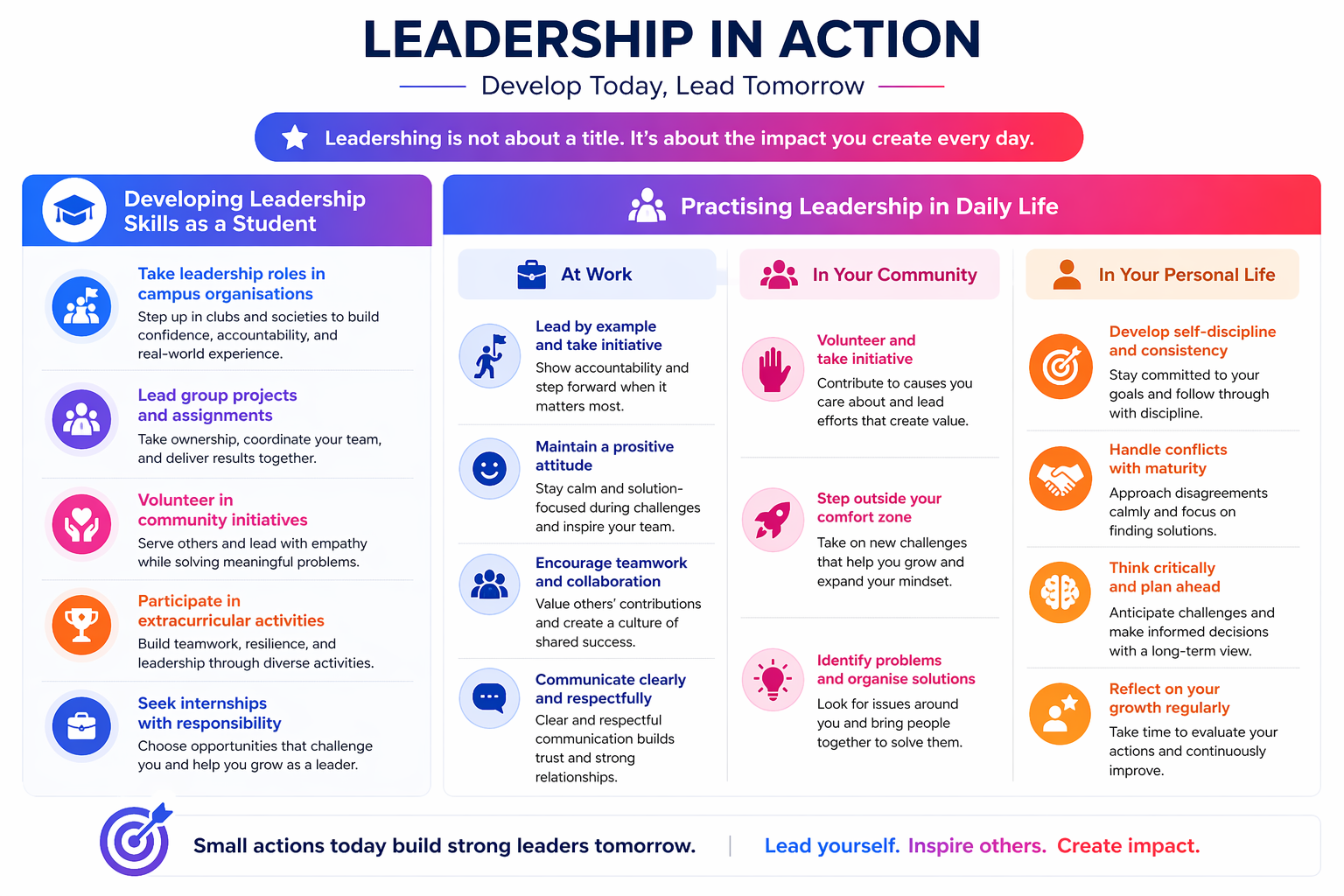
Take on leadership roles in campus organisations:
Student clubs and societies provide an ideal environment to practise leadership. Whether as a coordinator or team lead, these roles help build confidence, accountability, and decision-making skills early in your journey. -
Lead group projects and assignments:
Academic projects offer practical leadership experience. Taking ownership of planning, coordination, and execution helps develop responsibility and teamwork. -
Volunteer in community initiatives:
Volunteering allows you to lead with empathy while solving real-world challenges. It helps you develop people skills and a sense of responsibility. -
Participate in extracurricular activities:
Activities like sports, cultural groups, and clubs build teamwork, resilience, and leadership under pressure. -
Seek internships with responsibility:
Choose internships that allow you to take initiative and solve problems. Hands-on responsibility accelerates leadership development.
Practising Leadership in Daily Life
At Work
-
Lead by example and take initiative:
Demonstrate accountability and step forward when challenges arise. Actions speak louder than instructions. -
Maintain a positive attitude during challenges:
A leader’s attitude influences the entire team. Staying calm and solution-focused builds trust. -
Encourage teamwork and collaboration:
Focus on collective success. Involve others, recognise contributions, and build a collaborative environment. -
Communicate clearly and respectfully:
Clear communication prevents misunderstandings and strengthens relationships across teams.

In Your Community
-
Volunteer and take initiative:
Step forward to contribute and lead efforts that create value for others. -
Step outside your comfort zone:
Growth happens when you take on unfamiliar challenges and responsibilities. -
Identify problems and organise solutions:
Strong leaders recognise gaps and take action to solve them by mobilising people and resources.
In Your Personal Life
-
Develop self-discipline and consistency:
Meeting commitments and managing time effectively builds trust and reliability. -
Handle conflicts with maturity:
Approach disagreements calmly, listen actively, and focus on resolution. -
Think critically and plan ahead:
Anticipate challenges and prepare solutions in advance to stay proactive. -
Reflect on your growth regularly:
Self-reflection helps you understand your strengths and areas for improvement.
Final Thoughts — Your Leadership Journey Starts Now
Leadership is not a destination—it is a continuous journey. The professionals who create the greatest impact are those who commit to improving every day.
Start small. Take initiative. Learn continuously. Stay consistent.
Your leadership journey starts today—and Shrofile is here to support every step of it.
Ready to Build Stronger Leaders for Tomorrow?
Leadership is not just about potential — it’s about consistent development and the right opportunities. Whether you are an individual aiming to grow or an organization looking to strengthen your leadership pipeline, the right guidance makes all the difference.
At Shrofile Executive Search, we partner with organizations to identify, assess, and develop leadership talent that drives real impact and long-term success.
FAQs
What are leadership skills and why are they important?
Leadership skills are the abilities that help individuals guide, influence, and inspire others. They are important because they improve team performance, decision-making, and overall career growth.
Can leadership skills be developed or are they natural?
Leadership skills can absolutely be developed. While some people may have natural tendencies, effective leadership is built through practice, experience, and continuous learning.
What are the most important leadership skills to develop?
Key leadership skills include communication, decision-making, emotional intelligence, problem-solving, adaptability, and the ability to motivate and manage teams effectively.
How can students start developing leadership skills?
Students can develop leadership skills by taking roles in campus organisations, leading group projects, volunteering, participating in extracurricular activities, and seeking internships with responsibility.
How can professionals improve leadership skills at work?
Professionals can improve leadership by taking initiative, leading by example, communicating clearly, encouraging teamwork, and maintaining a positive attitude during challenges.
What is the difference between leadership and management?
Management focuses on processes, execution, and stability, while leadership focuses on people, vision, and driving change. Both are important, but leadership drives long-term impact.
Do you need a title to be a leader?
No, leadership is not defined by a title. Anyone who takes initiative, supports others, and influences positive outcomes can be a leader.
How does self-discipline impact leadership?
Self-discipline builds consistency and reliability, which are essential for gaining trust and respect as a leader. It helps in meeting goals and maintaining focus.
Why is communication important in leadership?
Communication ensures clarity, builds trust, and aligns teams toward common goals. Strong leaders are both effective speakers and active listeners.
How can leadership skills help career growth?
Leadership skills increase your ability to take responsibility, manage teams, and drive results, making you more valuable to organisations and accelerating career advancement.